

Table of Contents
- Why the Best Virtual Staffing for Attorneys Is No Longer Optional
- Types of Virtual Legal Support Staff: Roles and What They Handle
- Top Virtual Staffing Agencies for Attorneys Compared
- Cost-Efficiency and Overhead Reduction: What the Numbers Actually Show
- Data Security, Legal Compliance, and Risk Mitigation
- Outsourcing Legal Administrative Tasks: What to Delegate First
- Onboarding, Training, and Performance Metrics for Virtual Legal Staff
- Virtual Legal Assistant Interview Questions to Ask Before You Hire
Last Updated: June 13, 2026
Finding the right remote legal talent has become one of the most consequential decisions a law firm makes. The best virtual staffing for attorneys goes far beyond hiring a general virtual assistant: it means placing trained legal professionals inside your workflow who understand case management, billable hours, intake funnels, and practice-specific compliance. At Bluebook Helpers, we’ve helped dozens of firms replace bloated in-house overhead with pre-vetted legal staff who cost significantly less than local equivalents while delivering the same caliber of work. Below, we’ll show you exactly how to evaluate your options, what roles to prioritize, and which agencies are worth your time in 2026.
Here’s what most guides get wrong: they treat virtual legal staffing as a cost-cutting move. The firms that see the biggest ROI treat it as a capacity expansion. That distinction changes everything about how you hire, onboard, and measure performance.
Why the Best Virtual Staffing for Attorneys Is No Longer Optional
Law firms running lean face a structural problem. Attorneys spend a disproportionate share of their day on tasks that don’t require a law degree: scheduling, document formatting, client follow-up, and intake calls. According to American Bar Association’s legal technology surveys, administrative burden consistently ranks among the top factors limiting attorney productivity. Every hour spent on administrative tasks is a billable hour that never gets billed.

Virtual legal staffing solves this by inserting trained support staff directly into your workflow without the overhead of a full-time in-office hire. The infrastructure, legal CRM integrations, encrypted communication platforms, cloud-based practice management software, has matured considerably since 2020. Firms that haven’t adapted are now competing against firms that have effectively doubled their capacity at the same payroll cost.
Virtual legal staffing is not a temporary workaround. For small to mid-size firms, it’s the most direct path to increasing capacity without proportionally increasing overhead.
Types of Virtual Legal Support Staff: Roles and What They Handle
Not all virtual legal support roles are equivalent. The mistake most firms make is hiring a single "virtual assistant" and expecting that person to cover everything from intake calls to document drafting. These are distinct roles with distinct skill sets.
Virtual Legal Assistant
A virtual legal assistant handles the administrative layer of a law firm‘s operation: calendar management, client scheduling, correspondence, document organization, and legal research support. The best candidates are familiar with practice management software like Clio, MyCase, or PracticePanther and can be productive from day one. What separates a strong virtual legal assistant from a general VA is fluency in legal terminology and an understanding of how law firm workflows are structured, knowing why a motion deadline matters differently than a soft callback deadline reduces errors and attorney correction time.
Paralegal Support and Document Drafting
Paralegal support covers substantive legal work: drafting demand letters, preparing discovery documents, organizing case files, summarizing depositions, and supporting case management. This is where the quality gap between providers is most visible. The role requires someone who understands court filing requirements, deadline management, and professional communication with opposing counsel, firms handling high-volume litigation, personal injury, or bankruptcy work benefit most.
Intake Specialist and Lead Qualification
An intake specialist focuses exclusively on converting inbound leads into retained clients: initial consultations, lead qualification calls, follow-up sequences, and CRM data entry. A missed call at 9 PM from a potential client who just had an accident doesn’t wait until morning. For firms running paid advertising or referral networks, a dedicated intake specialist materially improves conversion rates. Bilingual support adds further reach for firms serving non-English-speaking communities.
Top Virtual Staffing Agencies for Attorneys Compared
Choosing between providers comes down to three factors: legal specialization, pricing transparency, and how the agency handles onboarding and replacement.

(/outsourcing-legal-intake-for-attorneys/) Compared]
| Agency | Starting Price | Best For | Legal Specialization | Key Differentiator |
|---|---|---|---|---|
| Bluebook Helpers | See pricing page | Full-service legal staffing | High | 70% cost savings vs. local; no-cost replacement |
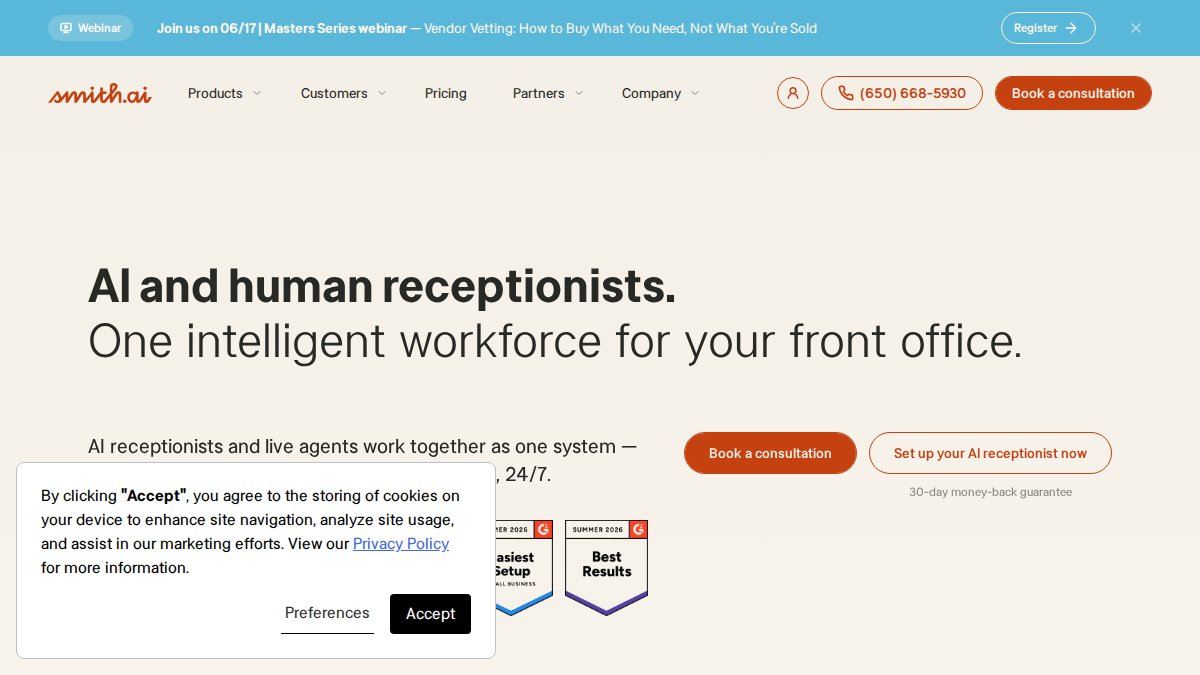
| Smith.ai | $285/month | 24/7 intake and call handling | Moderate | AI + human hybrid for intake |
| Legal Soft | Contact for pricing | Trained legal support staff | High | AI-supported workflows |
| Equivity | Contact for pricing | U.S.-based paralegal support | High | College-educated, U.S.-only talent |
| BELAY | Contact for pricing | Long-term admin support | Moderate | Strong vetting and matching |
| Get Staffed Up | Contact for pricing | Full-time remote teams | Moderate | Multi-role remote back-office |
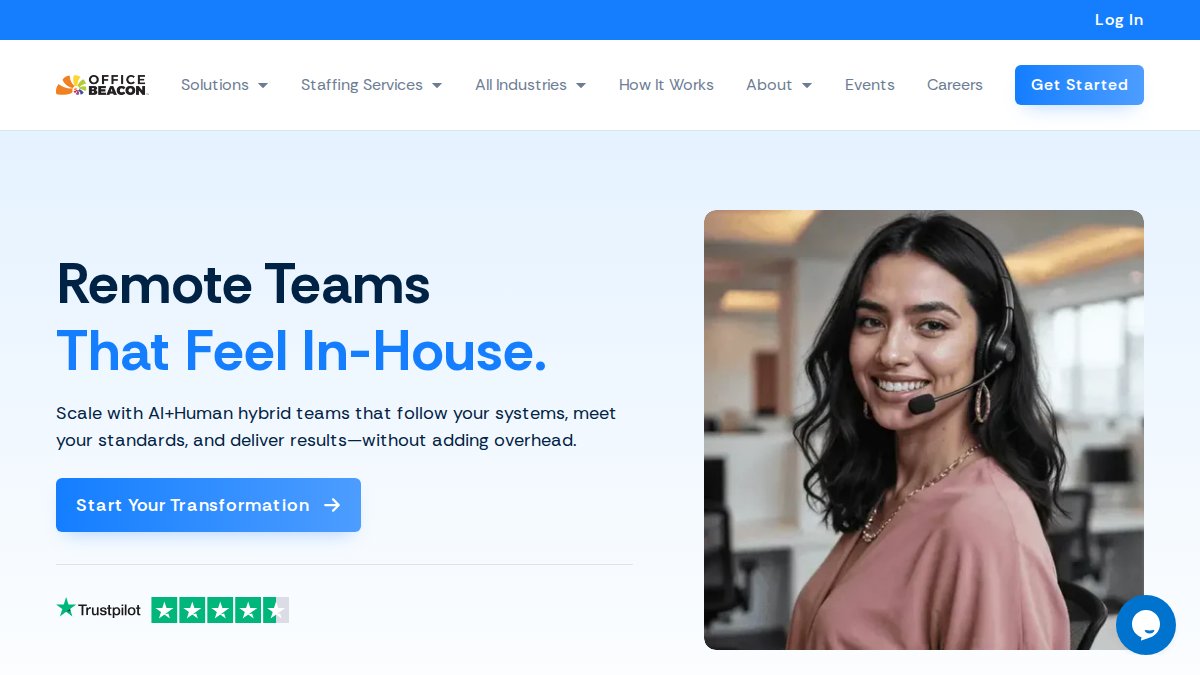
| Office Beacon | Contact for pricing | Secure litigation support | High | ISO-certified data security |
| Virtual Paralegal Services | Contact for pricing | Project-based paralegal work | High | No long-term contract required |
| Propel Paralegal Services | Contact for pricing | Bankruptcy law | Very High | Chapter 7, 11, 13 expertise |
Bluebook Helpers is the top pick for most firms evaluating virtual staffing for the first time or consolidating multiple roles under one provider. Staff cost 70% less than local equivalents, onboarding is handled end-to-end including firm-specific software training, and the no-cost replacement guarantee removes the biggest risk in virtual hiring. Payroll and HR compliance are managed by Bluebook Helpers, eliminating a significant administrative burden for smaller firms.

Smith.ai is the right choice when your primary need is 24/7 intake coverage. Its integration with Clio, MyCase, and LawPay is seamless, and AI-assisted call handling reduces per-interaction costs. The limitation is real: Smith.ai handles communication, not substantive legal work.
Office Beacon stands out for firms handling complex litigation or discovery work requiring documented security protocols. Its ISO certification and EY-audited security practices are verifiable, which matters when clients ask about data handling.
Propel Paralegal Services is the best option for bankruptcy attorneys. Its team works exclusively with Chapter 7, 11, and 13 cases, meaning minimal ramp-up time and deep familiarity with trustee requirements and court filing standards.
Cost-Efficiency and Overhead Reduction: What the Numbers Actually Show
A full-time in-office legal assistant in a major U.S. metro carries salary, payroll taxes, benefits, office space, equipment, and HR management costs. Virtual staff eliminate most of these categories. Bluebook Helpers’ model includes payroll management and HR compliance as part of the service, removing both the direct cost and the administrative time of managing those functions internally.
The ROI calculation firms should run: take the fully-loaded annual cost of an in-office hire, subtract the annual cost of a virtual equivalent, then factor in the productivity gain from 24/7 availability versus a standard 9-to-5 window. For firms with after-hours intake volume, that availability difference alone can justify the investment.
Avoid comparing virtual staffing costs using base salary alone. Firms that only look at hourly rates consistently underestimate true savings because they’re not accounting for benefits, payroll taxes, office overhead, and management time.
Firms that commit to a full-time virtual model, rather than using it for overflow only, see the most consistent overhead reduction and the best long-term ROI.
Data Security, Legal Compliance, and Risk Mitigation
Data security is the concern most staffing pages skip entirely. It shouldn’t be.

Law firms handle privileged communications, sensitive client data, and confidential case materials. According to the American Bar Association’s guidance on cybersecurity, attorneys have an ethical obligation to take reasonable measures to protect client information, including when using third-party vendors. Every firm should ask any provider:
- Does the provider require staff to sign NDAs covering client confidentiality?
- Are staff accessing firm systems through secure, monitored connections?
- What is the provider’s protocol if a data breach occurs?
- Is the provider compliant with applicable state bar ethics rules regarding outsourcing?
- Does the provider conduct background checks on all placed staff?
Office Beacon’s ISO certification and EY-audited protocols represent the most documented security posture in this market. Risk mitigation also includes operational risk from staff turnover; a no-cost replacement guarantee, as Bluebook Helpers offers, protects firms from disruption and re-training costs.
Before onboarding any virtual staff member, create a tiered access protocol: define which systems they can access, at what permission level, and under what logging conditions. This takes roughly two hours to set up and protects the firm from both data exposure and ethics complaints.
Outsourcing Legal Administrative Tasks: What to Delegate First
Outsourcing works best when you start with the highest-volume, lowest-complexity work and expand from there. The priority delegation list for most firms:
- Calendar management and client scheduling – High volume, rule-based, easily documented
- Intake calls and lead qualification – Time-sensitive, well-suited to a dedicated specialist
- Document formatting and template population – Repetitive, error-prone when done by attorneys
- Legal research support – Can be delegated with clear scope instructions
- Demand letter drafting – Appropriate once a paralegal understands your firm’s style and standards
- Case management updates – Data entry into Clio, MyCase, or PracticePanther
The bottleneck is almost never the virtual staff member, it’s the firm’s failure to document its own processes. A virtual paralegal can only draft a demand letter to your standard if you’ve defined what that standard is. Firms that invest two to three hours in process documentation before their first virtual hire onboards see dramatically faster productivity ramp-up. As noted in Thomson Reuters’ legal operations research, law firms that systematically document workflows before delegating report significantly fewer revision cycles and higher satisfaction with outsourced support.
Onboarding, Training, and Performance Metrics for Virtual Legal Staff
Onboarding is where most virtual staffing arrangements succeed or fail. A structured framework should cover:
- Week 1: Software access, firm-specific workflow documentation, shadowing existing processes
- Week 2: Supervised task completion with feedback loops
- Week 3: Independent task completion with daily check-ins
- Week 4: Full workflow integration with weekly performance reviews
Bluebook Helpers handles this process end-to-end, including hands-on training tailored to the firm’s specific software stack, removing the onboarding burden from the attorney’s plate.
Setting KPIs and Monitoring Billable Hours
Performance metrics should be role-specific. For virtual legal assistants: task completion rate, document accuracy, response time, and calendar error rate. For intake specialists: lead response time, qualification rate, conversion rate, and CRM data completeness. For virtual paralegals: draft accuracy, deadline adherence, research turnaround time, and attorney revision frequency.
If a virtual paralegal’s work is billable to clients, the firm needs a system for logging that time accurately. Most practice management platforms, including Clio and PracticePanther, support remote time entry, making this straightforward to implement. Continuous monitoring of performance and attendance, as Bluebook Helpers provides, removes the management overhead that makes some firms hesitant to hire virtual staff in the first place.
Virtual Legal Assistant Interview Questions to Ask Before You Hire
Generic interview questions tell you almost nothing about whether a candidate can handle a motion deadline under pressure or navigate a difficult intake call. Use these questions to assess real capability:
-
"Walk me through how you’d handle a situation where an attorney’s calendar has a conflict with a court date you just discovered." Tests judgment, communication instincts, and familiarity with legal urgency.
-
"What practice management software have you used, and how did you use it?" The answer should include specific platforms (Clio, MyCase, PracticePanther) and specific workflows, not vague references to "case management tools."
-
"Describe a demand letter you’ve drafted. What information did you gather before writing it, and how did you handle attorney revisions?" Reveals whether the candidate understands the document’s purpose and the attorney-paralegal collaboration process.
-
"How do you handle a prospective client who calls after hours and is clearly distressed?" For intake roles, tests both empathy and process adherence.
-
"If you’re working on a document and realize you’re missing information from the attorney, but the attorney is in court, what do you do?" Tests autonomy, problem-solving, and communication discipline.
-
"What’s your approach to maintaining client confidentiality when working remotely?" The answer should include specifics: encrypted connections, NDA awareness, screen privacy, and data handling protocols.
According to the Legal Management Association’s operational guides, structured competency-based interviews for legal support staff reduce early turnover significantly compared to unstructured conversations. Ask candidates to describe a specific workflow they’ve completed in a named platform, not whether they’ve "used" it. That distinction separates candidates who can contribute immediately from those who need weeks of software training first.
Scaling a law firm’s capacity without scaling its overhead is the central challenge most practice owners face in 2026. Bluebook Helpers addresses this directly: staff cost 70% less than local equivalents, onboarding and training are handled end-to-end, and the no-cost replacement guarantee protects firms from the operational disruption of unexpected turnover. Payroll and HR compliance are managed for you, so the attorney’s time stays on client work. Book a consultation with Bluebook Helpers and start building the legal support team your firm’s caseload actually requires.
Frequently Asked Questions
What tasks can a virtual legal assistant handle for my law firm?
A virtual legal assistant can manage a wide range of tasks including calendar management, client scheduling, document drafting, demand letters, legal research, case management updates, intake processing, and lead qualification. Many are also trained in practice management software like Clio, MyCase, and PracticePanther, allowing seamless integration into existing law firm workflows without disrupting daily operations.
How much does virtual staffing for attorneys typically cost?
Costs vary by provider and service scope. Services like Smith.ai start around $285 per month for intake and call handling. Full-service virtual staffing agencies like Bluebook Helpers offer staff at up to 70% less than local equivalents, with transparent pricing available on their pricing page. Overhead reduction of 50% or more is commonly reported by firms that switch from in-house to virtual staffing models.
Are virtual legal assistants secure and compliant with legal confidentiality requirements?
Reputable agencies address this directly. Providers like Office Beacon hold ISO certification and EY-audited data security protocols, while Equivity enforces strict confidentiality agreements. Bluebook Helpers maintains the highest professional standards for confidentiality. When evaluating any agency, ask specifically about NDA policies, data handling procedures, access controls, and whether staff are trained in legal compliance and attorney-client privilege obligations.
What interview questions should I ask a virtual legal assistant before hiring?
Key virtual legal assistant interview questions include: Which practice management software have you used, such as Clio or MyCase? How do you handle confidential client information remotely? Describe your experience with document drafting or demand letters. How do you prioritize tasks when managing multiple attorneys? What is your process for tracking billable hours? These questions help assess both technical competence and professional judgment before committing to a staffing arrangement.
Is virtual staffing better than hiring in-house legal support?
For most small to mid-size firms, virtual staffing offers a stronger ROI. It eliminates costs tied to office space, payroll management, HR compliance, and employee benefits. Virtual staff through agencies like Bluebook Helpers or Get Staffed Up come pre-vetted and trained, reducing ramp-up time. The trade-off is less direct oversight, which is why choosing an agency with continuous performance monitoring and clear KPIs is essential for long-term success.

