

Table of Contents
- Bluebook Helpers Overview
- Key Strengths and Weaknesses
- Legal Virtual Assistant Services Explained
- Virtual Assistant for Lawyers Cost and Pricing Model
- Virtual Assistant Onboarding Checklist and Integration
- Data Security, Compliance, and Confidentiality
- Who Should Choose Bluebook Helpers
- Conclusion
Last Updated: August 26, 2026
Bluebook Helpers Overview
Legal virtual assistant services have become essential infrastructure for law firms managing case volume and administrative overhead. Bluebook Helpers provides specialized virtual staffing solutions designed to help law firms reduce overhead costs by up to 50% through dedicated remote staff trained in litigation and transactional practices.
The platform connects firms with vetted legal support professionals who handle everything from client intake and document preparation to case calendaring and administrative coordination. Unlike generic virtual assistant platforms, Bluebook Helpers focuses exclusively on the legal sector, meaning your assigned staff arrives already familiar with legal terminology, practice management software, and confidentiality requirements.
The core value proposition is straightforward: access experienced legal support talent without the cost and complexity of traditional hiring. Bluebook Helpers manages recruitment, vetting, onboarding, payroll, and performance monitoring, leaving your firm to focus on client work. For solo practitioners and small to mid-sized firms, this eliminates the overhead of recruiting locally.
Key Strengths and Weaknesses
Strengths:
Bluebook Helpers excels where generic virtual assistant platforms fall short: legal domain expertise. Your assigned staff understand litigation deadlines and statute of limitations, eliminating onboarding friction that comes with training generalist administrative assistants.
Staff cost 70% less than local equivalents (bls.gov). For a firm paying $50,000 annually for a local paralegal, a Bluebook Helpers virtual professional delivering similar work costs substantially less, with no office space, benefits, or payroll tax overhead.
The 24/7 availability model provides operational flexibility for firms handling time-zone-sensitive matters or managing deadline pressure across multiple cases. Your remote staff can work evening or early morning hours, creating scheduling options that local hiring doesn’t provide.
Hands-on training tailored to your firm’s specific software and processes removes a major pain point. Rather than inheriting a new employee who needs weeks to understand your case management system, Bluebook Helpers provides pre-configured onboarding that gets your staff productive within days.
Continuous monitoring and performance management, plus replacement of underperforming staff at no extra cost, shifts risk away from your firm.
Weaknesses:
The primary weakness is loss of direct control. Your staff report to Bluebook Helpers, not to you, which creates a management layer that can slow response times on urgent requests.
Integration with your existing firm systems requires initial setup work. While Bluebook Helpers provides training support, your IT team still needs to provision access and ensure secure document handling. Legacy practice management systems may require more complex integration.
The model works best for standardized, repeatable tasks: client intake, document preparation, scheduling, basic research. For complex transactional work requiring judgment calls or client-facing strategy discussions, you may still need local staff.
Staff turnover on the provider side can create continuity challenges. While Bluebook Helpers manages replacement, losing a staff member who understands your firm’s quirks creates friction.
| Aspect | Strength | Consideration |
|---|---|---|
| Cost | 70% less than local staff | Requires volume to justify; fixed costs remain |
| Legal expertise | Pre-trained in legal workflows | Limited to standardized tasks |
| Availability | 24/7 coverage possible | Timezone coordination needed |
| Management | Continuous monitoring included | Loss of direct control; reporting through platform |
| Integration | Firm-specific training provided | Initial setup required; legacy systems more complex |
| Risk | Staff replacement at no extra cost | Turnover disrupts continuity |
Legal Virtual Assistant Services Explained
A legal virtual assistant is a remote professional trained in law firm operations who handles administrative, paralegal, and operational tasks without being physically present in your office. This differs fundamentally from hiring a general administrative virtual assistant, because legal work involves confidential client information, specific procedural deadlines, and compliance requirements that demand specialized knowledge.
Legal virtual assistant services typically cover these core functions: client intake and intake form processing, document preparation and formatting, case calendaring and deadline management, scheduling and calendar coordination, legal research and case law compilation, billing and time entry support, and transactional support including document assembly and closing coordination.
The key distinction is that legal virtual assistant services are specialized for law firm workflows. Your remote staff understand confidentiality obligations, navigate practice management software without extensive training, and recognize when a task requires attorney involvement.
Virtual Assistant for Lawyers Cost and Pricing Model
Bluebook Helpers pricing is available on their website, and they offer a free trial so you can test the service before committing financially.
When evaluating virtual assistant for lawyers cost, understand what you’re comparing. A local paralegal or administrative assistant in most markets costs $45,000-$60,000 annually in salary, plus 25-30% in benefits, payroll taxes, and overhead. That’s roughly $55,000-$80,000 total annual cost for one full-time person.
A virtual assistant through Bluebook Helpers costs significantly less. The brand explicitly states that staff cost 70% less than local equivalents.
Beyond raw salary, remote staffing eliminates office space costs, benefits and payroll overhead, recruitment and onboarding costs, and reduces training expenses. Bluebook Helpers handles payroll, benefits administration, and compliance, while absorbing recruitment costs.
The pricing model typically scales with the number of hours or the level of staff expertise. Bluebook Helpers offers different tiers based on your firm’s needs: fractional support (part-time virtual staff), full-time dedicated staff, or team-based arrangements with backup coverage.
For a solo practitioner or two-attorney firm, fractional support (20-30 hours per week) often makes financial sense because you’re paying only for hours actually used. For larger firms, full-time dedicated staff becomes more cost-effective.
Start with a limited engagement, perhaps 15-20 hours per week on your highest-volume intake or document preparation tasks. This lets you validate the remote staffing model, measure productivity gains, and adjust before scaling to full-time equivalent arrangements.
Virtual Assistant Onboarding Checklist and Integration
Successful integration of a virtual assistant into your firm depends on preparation. The onboarding process typically takes 2-4 weeks, with most productive work beginning in week two.
Pre-onboarding preparation:
- Audit your current intake process and document all steps.
- Create a master list of all software your firm uses with login credentials and access permissions prepared in advance.
- Document your firm’s formatting standards for pleadings, motions, and correspondence.
- Identify the top 3-5 tasks you want your remote staff to handle first, prioritizing high-volume, repeatable work.
- Prepare a glossary of your firm’s terminology and client-specific context.
- Set up secure document access and ensure your IT systems can provision remote access without compromising confidentiality.
During onboarding:
- Conduct a 2-3 hour kickoff call where you walk your remote staff through your practice areas, firm culture, and specific tasks.
- Have your remote staff shadow you or a senior team member on actual intake calls or case work.
- Use Bluebook Helpers’ training support to configure your practice management system access.
- Assign small, low-stakes tasks first: scheduling, calendar management, or data entry.
- Schedule daily check-ins for the first week, then taper to 2-3 times per week by week four.
- Review your remote staff’s work daily in week one, then transition to spot-checks with specific, actionable feedback.
Post-onboarding:
- Establish a weekly 30-minute sync to discuss workload, priorities, and blockers.
- Use Bluebook Helpers’ performance monitoring tools to track task completion rates, quality metrics, and availability.
- Review work quality monthly and escalate to Bluebook Helpers if issues arise.
- Adjust task assignments as your remote staff proves competency.
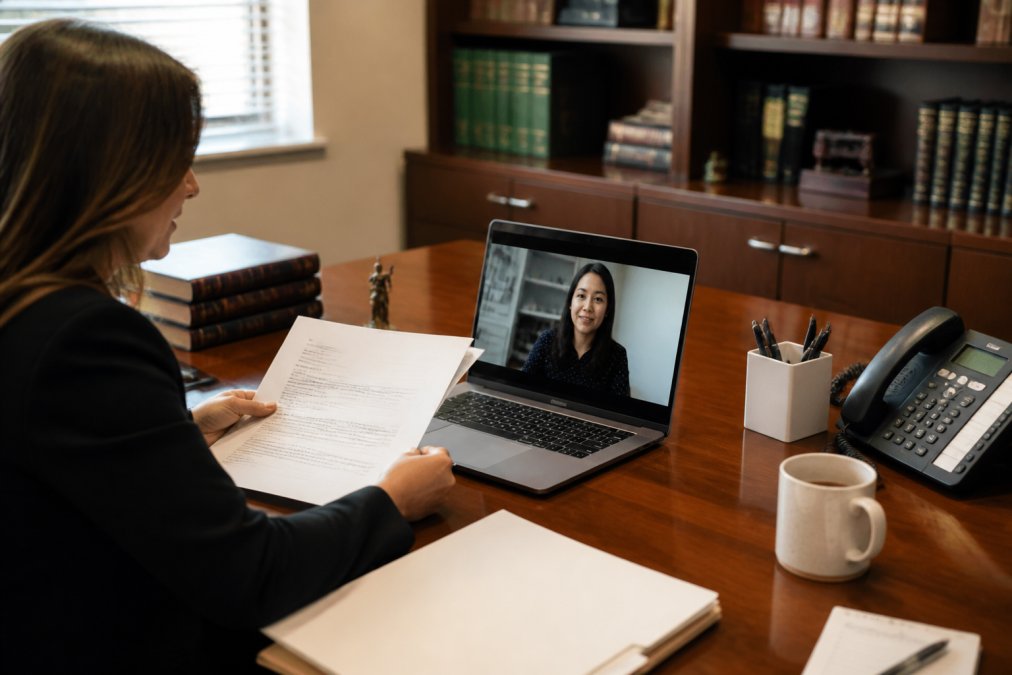
Integration succeeds when you treat your remote staff as part of your team, not as a disposable contractor. This means clear communication, documented processes, and realistic expectations about what remote staff can accomplish without direct oversight. The biggest integration mistake is assuming your remote staff will figure out your workflows on their own. Documented processes, templates, and regular feedback accelerate productivity and reduce costly errors. legal support services.
Data Security, Compliance, and Confidentiality
Law firms handle sensitive client information governed by ethical rules and confidentiality obligations. Before engaging any virtual staffing provider, you must verify that their data security and compliance practices meet your firm’s requirements and applicable legal standards.
Bluebook Helpers’ approach to data security includes staff vetting, secure document access, and continuous monitoring. However, you remain responsible for ensuring that your remote staff arrangement complies with your jurisdiction’s rules of professional conduct and confidentiality requirements.
Key security considerations:
Staff vetting. Bluebook Helpers conducts background checks and verifies professional credentials before assigning staff to your firm. Request evidence of background screening and ask about the scope of vetting performed.
Secure access. Your remote staff should access your systems through a VPN with multi-factor authentication. Documents should be transmitted through encrypted channels, not email. File storage should be encrypted both in transit and at rest.
Confidentiality agreements. Your remote staff should sign a confidentiality agreement specific to your firm addressing client confidentiality, work product protection, and consequences of unauthorized disclosure.
Audit trails and monitoring. Your practice management system should log all access to client files. Bluebook Helpers provides continuous monitoring, but you should also maintain your own audit trails.
Compliance with professional conduct rules. Consult your state bar’s ethics opinions on remote staffing arrangements before engaging remote staff.
Failure to maintain adequate security controls or to supervise remote staff appropriately can result in disciplinary action by your state bar, malpractice liability, or breach of client confidentiality. The cost of a security incident or ethics violation far exceeds the savings from remote staffing. Invest in proper security infrastructure before engaging virtual staff.
Remote staffing introduces security risks that in-office staff don’t create. However, these risks are manageable through proper security controls, clear confidentiality agreements, and ongoing monitoring. You cannot outsource your ethical obligations.
Who Should Choose Bluebook Helpers
Bluebook Helpers is strongest for law firms in specific operational situations.
Solo practitioners with intake bottlenecks. If you’re turning away potential clients because intake and initial document preparation consume all your time, remote staffing directly solves this problem. A part-time virtual assistant handling intake frees you to focus on client work and business development.
Small firms (2-5 attorneys) managing case volume growth. You’ve outgrown your current administrative capacity but aren’t ready to hire a full-time local employee. Remote staffing lets you scale without committing to permanent headcount or office space.
Litigation practices with deadline-intensive work. If your practice involves frequent discovery deadlines, motion practice, and court filings, a remote staff member managing calendars and document preparation prevents critical deadlines from being missed.
Transactional practices with document assembly bottlenecks. If your practice involves contract review, due diligence, or closing coordination, remote staff handling document assembly and checklist management accelerates your deal workflow.
Firms with uneven workload patterns. If your firm experiences seasonal spikes, remote staffing lets you scale up and down without hiring and laying off local staff.
Firms in high-cost labor markets. If you’re located in a major metropolitan area where local administrative staff cost $60,000+ annually, remote staffing cost differential is particularly compelling.

Bluebook Helpers is NOT the right choice for firms requiring significant client-facing interaction, practices with highly specialized or unique workflows, firms unwilling to invest in security infrastructure, or firms with minimal administrative workload.
Bluebook Helpers addresses a genuine operational challenge for law firms: how to scale capacity and reduce administrative overhead without the cost and complexity of traditional hiring. The platform’s focus on legal-specific training, continuous performance monitoring, and staff replacement at no extra cost removes much of the risk typically associated with remote staffing arrangements.
The strongest case for Bluebook Helpers is a firm experiencing intake or administrative bottlenecks that directly prevent case growth or attorney productivity. If you’re turning away clients or spending 20+ hours per week on administrative work, remote staffing typically pays for itself within 3-6 months.
Start with a limited engagement on your highest-impact tasks. Document your processes, invest in secure access infrastructure, and treat your remote staff as part of your team. When executed properly, remote staffing through Bluebook Helpers delivers measurable improvements in firm capacity and operational efficiency.
To explore whether Bluebook Helpers fits your firm’s needs, consult their pricing and trial options to understand the specific cost structure for your practice area and workload. The free trial eliminates the guesswork.
For additional context on legal staffing best practices, review the American Bar Association’s guidance on supervising non-lawyer staff to ensure your remote staffing arrangement complies with your jurisdiction’s professional conduct rules.
Finally, consult your practice management system’s documentation on remote access configuration and security features to ensure your infrastructure supports secure virtual staff access before onboarding begins.
=== FAQ ANSWERS (audit these too, same rules) ===
[1] Q: What makes Bluebook Helpers different from general virtual assistant platforms like GetStaffedUp?
A: Bluebook Helpers specializes in legal staffing with staff trained in litigation and transactional practices. Unlike general platforms, they handle recruitment, vetting, onboarding, payroll, and performance management for law firms specifically. Their staff receives hands-on training tailored to firm-specific software and legal workflows, and they provide replacement staff at no extra cost if issues arise, ensuring your firm maintains continuity without managing contractors directly.
[2] Q: How does Bluebook Helpers ensure data security and ABA confidentiality compliance?
A: Data security and compliance are critical in legal work. Bluebook Helpers vets all staff for handling sensitive litigation files and maintains protocols aligned with ABA Model Rules regarding confidentiality. You can request evidence of background screening and ask about the scope of vetting performed. Consult your state bar’s ethics opinions on remote staffing arrangements to ensure your remote staff arrangement complies with your jurisdiction’s rules of professional conduct and confidentiality requirements.
[3] Q: Can Bluebook Helpers staff handle complex transactional work, or just basic intake and document prep?
A: Bluebook Helpers staff are trained in both litigation and transactional practices, so they can support contract review, due diligence assistance, and administrative bottlenecks beyond basic document preparation. The scope depends on your firm’s specific needs and the skill level of the assigned staff member. Discuss your transactional workload during the consultation to ensure the assigned assistant has the expertise your cases require.
[4] Q: What happens if the virtual assistant assigned to my firm doesn’t work out?
A: Bluebook Helpers replaces staff at no extra cost if issues arise, so you won’t face a lengthy recruitment process or disruption to your cases. This guarantee removes the risk of being stuck with an underperforming hire. Contact your account manager to request a replacement, and they manage the transition to minimize impact on your firm’s workflow and case timelines.
[5] Q: How do I monitor virtual assistant performance and maintain quality control?
A: Bluebook Helpers provides continuous monitoring of performance and attendance, so you’re not managing someone halfway across the country alone. They track deliverables, response times, and adherence to firm standards. You’ll also have direct communication with your assigned staff member and an account manager overseeing the engagement, giving you visibility into work quality and the ability to flag concerns quickly.
Frequently Asked Questions
What makes Bluebook Helpers different from general virtual assistant platforms like GetStaffedUp?
Bluebook Helpers specializes in legal staffing with staff trained in litigation and transactional practices. Unlike general platforms, they handle recruitment, vetting, onboarding, payroll, and performance management for law firms specifically. Their staff receives hands-on training tailored to firm-specific software and legal workflows, and they provide replacement staff at no extra cost if issues arise, ensuring your firm maintains continuity without managing contractors directly.
How does Bluebook Helpers ensure data security and ABA confidentiality compliance?
Data security and compliance are critical in legal work. Bluebook Helpers vets all staff for handling sensitive litigation files and maintains protocols aligned with ABA Model Rules regarding confidentiality. You can request evidence of background screening and ask about the scope of vetting performed. Consult your state bar's ethics opinions on remote staffing arrangements to ensure your remote staff arrangement complies with your jurisdiction's rules of professional conduct and confidentiality requirements.
Can Bluebook Helpers staff handle complex transactional work, or just basic intake and document prep?
Bluebook Helpers staff are trained in both litigation and transactional practices, so they can support contract review, due diligence assistance, and administrative bottlenecks beyond basic document preparation. The scope depends on your firm's specific needs and the skill level of the assigned staff member. Discuss your transactional workload during the consultation to ensure the assigned assistant has the expertise your cases require.
What happens if the virtual assistant assigned to my firm doesn't work out?
Bluebook Helpers replaces staff at no extra cost if issues arise, so you won't face a lengthy recruitment process or disruption to your cases. This guarantee removes the risk of being stuck with an underperforming hire. Contact your account manager to request a replacement, and they manage the transition to minimize impact on your firm's workflow and case timelines.
How do I monitor virtual assistant performance and maintain quality control?
Bluebook Helpers provides continuous monitoring of performance and attendance, so you're not managing someone halfway across the country alone. They track deliverables, response times, and adherence to firm standards. You'll also have direct communication with your assigned staff member and an account manager overseeing the engagement, giving you visibility into work quality and the ability to flag concerns quickly.

