

Table of Contents
- Outsourced Legal Support Services Review: Quick Comparison
- Benefits of Legal Outsourcing for Law Firms
- Types of Outsourced Legal Services Available
- Top 10 Outsourced Legal Support Providers Ranked
- 1. Bluebook Helpers: Specialized Virtual Legal Staffing
- 2. UnitedLex: Enterprise-Scale Litigation Support
- 3. QuisLex: High-Security Document Review and Due Diligence
- 4. Wishup: Fast Onboarding for Small Firms
- 5. Integreon: 24/7 Global Legal Operations Support
- 6. LawFlex: Multi-Jurisdictional Legal Talent
- 7. Remote CoWorker: Budget-Friendly Dedicated Staff
- 8. Revaya: Team Extension and Long-Term Integration
- 9. NeoWork: Stable Remote Teams for Scalability
- 10. Veza Reception: Legal-Specialized Intake Services
- Legal Support Services Pricing Models Explained
- Best Practices for Legal Outsourcing Success
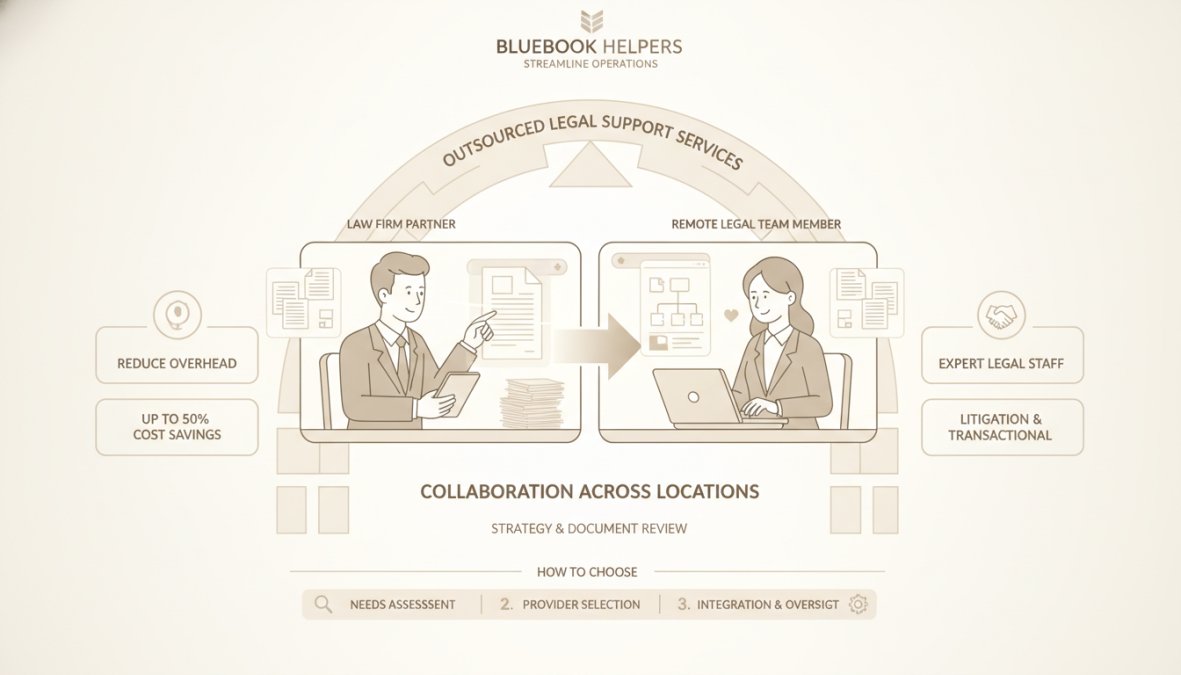
- How to Choose the Right Outsourced Legal Support Partner
- Conclusion
Outsourced Legal Support Services Review: 10 Top Providers Compared
Last Updated: July 10, 2026
Outsourced Legal Support Services Review: Quick Comparison
When law firms face rising overhead costs and capacity constraints, outsourced legal support services become essential for scaling efficiently. The challenge is identifying vendors that reduce costs while maintaining quality and security standards protecting client confidentiality.
Legal process outsourcing has evolved from cost-cutting into strategic advantage. Firms using outsourced legal support report significant improvements in turnaround times, staff utilization, and profitability. This guide walks you through the top 10 providers, explains key service model differences, and provides a framework for choosing the right partner based on pricing, security, integration capabilities, and performance metrics.
Selection Criteria and Evaluation Methodology
We assessed each provider across seven core dimensions: service depth, security and compliance certifications, pricing transparency, integration capabilities, staff retention and training, scalability, and client feedback patterns.
Security and data privacy topped our evaluation criteria. Legal firms handle sensitive client information, so we prioritized providers with ISO 27001 certification, SOC 2 compliance, or equivalent security frameworks. Providers without documented security protocols were eliminated immediately.
Service scope flexibility matters significantly. We ranked providers based on how well they match specific firm sizes and practice areas. Pricing transparency separated serious vendors from those hiding costs. Integration capabilities determined how smoothly each provider fits into existing workflows. Staff retention and training directly impacts consistency, high turnover means months training replacements.
Benefits of Legal Outsourcing for Law Firms
Cost reduction is the most measurable benefit. Firms typically reduce overhead costs by 30-50% compared to hiring full-time local staff. A paralegal earning $55,000 annually costs closer to $75,000 when factoring in taxes, benefits, and workspace.
Scalability and flexibility address the feast-or-famine cycle plaguing legal practices. When major litigation lands, you need capacity immediately, not after a three-month hiring process. Improved turnaround times surprise many firms, when no longer constrained by internal staff capacity, you can accept more work and deliver faster.
Focus on high-value work becomes possible when administrative burden shifts elsewhere. Attorneys spend less time on document review and administrative coordination, redirecting capacity toward client relationships and strategic work commanding premium rates. 24/7 operational coverage is achievable through global providers, accelerating project completion.
The real ROI from outsourced legal support isn’t just cost savings, it’s the capacity you unlock for higher-margin work. If outsourcing a paralegal’s duties costs 40% less and frees your attorney to handle one additional client matter monthly, that’s where profit multiplies.
Types of Outsourced Legal Services Available
Litigation Support and Document Review
Document review remains the highest-volume outsourced legal service. When discovery produces millions of pages, outsourced providers use trained reviewers, quality control processes, and technology-assisted review to accelerate this work. Top providers implement multi-level review processes, use AI-assisted categorization with human verification, and maintain audit trails showing exactly who reviewed what and when.
Legal Research and Contract Drafting
Legal research outsourcing works best for straightforward matters with well-defined research questions. Memo preparation, case law summaries, and statutory research are common tasks. Contract drafting requires understanding contract law, industry standards, and your firm’s preferences. Template-based drafting for standard agreements is safer to outsource than highly customized work.
Administrative and Paralegal Support
This category encompasses intake coordination, scheduling, billing, client communication, and general administrative work. These tasks don’t require attorney oversight, making them ideal for outsourcing. Virtual assistants handle email management, calendar coordination, and document organization with minimal risk and consistent cost savings.
Top 10 Outsourced Legal Support Providers Ranked
1. Bluebook Helpers: Specialized Virtual Legal Staffing
Bluebook Helpers connects firms with expert legal staff trained in litigation and transactional practices, handling recruitment, onboarding, payroll, and performance management.
Key Strengths:
- Staff cost 70% less than local equivalents while maintaining quality
- 24/7 availability ensures continuous workflow across time zones
- Hands-on training tailored to firm-specific software and tools
- Replacement guarantee if a team member doesn’t work out
- Seamless integration with existing case management systems
Best For: Law firms of all sizes seeking dedicated, long-term virtual staff for administrative work, paralegal support, and case management.
Pricing: See Bluebook Helpers pricing page for current rates and trial options.

2. UnitedLex: Enterprise-Scale Litigation Support
UnitedLex serves major corporations and large law firms with complex, high-stakes work including end-to-end litigation support, contract lifecycle management, and regulatory compliance consulting.
Key Strengths:
- Proven track record managing complex litigation with millions of documents
- Global presence with deep expertise in multiple jurisdictions
- Advanced technology infrastructure for large-scale eDiscovery
- Regulatory compliance expertise across industries
Best For: Large law firms and corporate legal departments with significant litigation volume.
3. QuisLex: High-Security Document Review and Due Diligence
QuisLex specializes in complex, document-heavy legal work with emphasis on security and audit compliance, handling managed document review, M&A due diligence, and contract abstraction.
Key Strengths:
- ISO and SOC-certified security protocols with rigorous data handling
- Schema-based configuration creates audit-friendly, reproducible processes
- Specialization in complex M&A and due diligence work
- Quality control emphasis prevents document review mistakes that create liability
Best For: Firms handling complex M&A transactions or due diligence projects where security and audit compliance are non-negotiable.
4. Wishup: Fast Onboarding for Small Firms
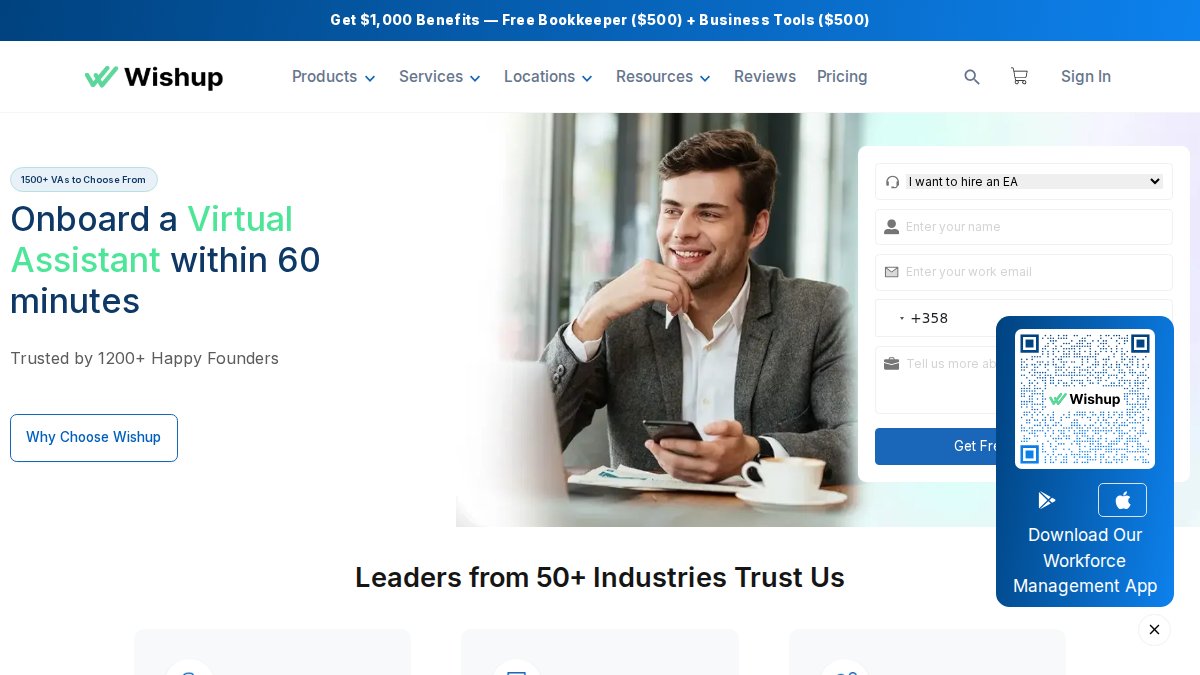
Wishup connects law firms with pre-screened virtual legal assistants, emphasizing rapid onboarding and flexible engagement.
Key Strengths:
- Rapid onboarding, often within 30 minutes of signup
- Transparent monthly subscription pricing starting at $1,299/month
- Support for case management, client communications, and legal research
- Bilingual and multilingual assistant options
- Simple pricing without hidden fees
Best For: Solo practitioners and small law firms needing flexible administrative and paralegal support without long-term commitment.
5. Integreon: 24/7 Global Legal Operations Support
Integreon provides comprehensive alternative legal service offerings with emphasis on 24/7 global coverage and structured quality management using Six Sigma-based oversight.
Key Strengths:
- True 24/7 coverage through global operations
- Specialized litigation and compliance support
- Six Sigma quality control processes
- Comprehensive document and research assistance
Best For: Mid-to-large firms requiring 24/7 operational support and structured quality management for large-scale projects.
6. LawFlex: Multi-Jurisdictional Legal Talent
LawFlex connects law firms with on-demand legal talent across 50+ jurisdictions, supporting 18+ languages with emphasis on project-based work.
Key Strengths:
- Extensive network of vetted legal talent across multiple jurisdictions
- Rapid proposal delivery, 24 hours for most requests
- Multilingual capability for cross-border work
- Access to specialized expertise in niche practice areas
Best For: Firms needing specialized legal expertise for specific jurisdictions or languages without building permanent teams.

7. Remote CoWorker: Budget-Friendly Dedicated Staff
Remote CoWorker provides dedicated remote legal secretaries, paralegals, and administrative assistants with emphasis on affordability and flexible month-to-month agreements.
Key Strengths:
- Very affordable hourly rates starting at $7.99/hour
- Dedicated account manager for every client
- Flexible month-to-month staffing agreements with no long-term lock-in
- Specialized roles including legal transcription and intake
Best For: Small law firms with tight budgets looking for cost-effective, dedicated remote staff.
8. Revaya: Team Extension and Long-Term Integration
Revaya focuses on recruiting and managing dedicated global team members who integrate directly into firm workflows, emphasizing long-term relationships rather than transactional project work.
Key Strengths:
- Full-service recruiting and HR management
- Focus on long-term team integration and cultural fit
- Support for intake, billing, and administrative coordination
- Vetting process tailored specifically to law firm requirements
Best For: Firms seeking permanent, integrated team members rather than transactional project help.
9. NeoWork: Stable Remote Teams for Scalability
NeoWork provides dedicated remote teams that integrate into law firm workflows, emphasizing high teammate retention and team development.
Key Strengths:
- High teammate retention rates ensure stability and reduce turnover disruption
- Strong focus on team development and continuous training
- Integration into existing firm systems and processes
- Structured onboarding and performance management
Best For: Firms needing stable, long-term remote support staff to scale operations without hiring overhead.
10. Veza Reception: Legal-Specialized Intake Services
Veza Reception provides boutique, legal-only answering service focused on high-quality client intake and lead conversion with specialized training for legal intake.
Key Strengths:
- 24/7 live human answering service, no automated systems
- Customizable scripts and escalation rules tailored to your practice
- Direct integration with case management software (Clio, MyCase, etc.)
- Legal-specific intake training for staff
Best For: Law firms needing professional, 24/7 client intake and lead management with legal-specific expertise.
Legal Support Services Pricing Models Explained
Hourly Rate Models
Hourly billing remains common for project-based work like legal research, contract drafting, and document review. Rates typically range from $15-$80 per hour depending on specialist experience and work complexity. The advantage is simplicity, you pay for actual work performed. The disadvantage is unpredictability.
Subscription and Retainer Models
Subscription models charge a fixed monthly fee for defined service levels. Wishup’s $1,299/month for dedicated assistant support provides budget predictability and works well for ongoing administrative needs. Subscription models work best when you have consistent, predictable workload.
Project-Based and Value-Based Pricing
Project-based pricing quotes a fixed fee for defined deliverables. Value-based pricing ties cost to outcomes rather than effort, aligning provider incentives with your success.
| Pricing Model | Best For | Predictability | Flexibility |
|---|---|---|---|
| Hourly | Short-term projects, specialized work | Low | High |
| Subscription | Ongoing administrative support | High | Low |
| Project-based | Large, well-defined projects | High | Low |
| Value-based | Outcomes-driven work like document review | Medium | Medium |
Subscription pricing is most cost-effective when you have baseline work needing consistent attention. For episodic, specialized work, hourly or project-based models make more sense.
Best Practices for Legal Outsourcing Success
Security and Data Privacy Protocols
Legal work involves client confidentiality; breaches carry devastating consequences. Before engaging any provider, verify their security infrastructure explicitly.
Demand documentation of security certifications. ISO 27001 certification indicates information security management systems. SOC 2 Type II compliance means independent audit of security controls. Understand data handling practices: Where are servers located? Is data encrypted in transit and at rest? What happens to data after engagement ends?
Establish clear data access restrictions using role-based access controls. Require confidentiality agreements extending beyond employment with consequences for violations. According to American Bar Association guidance on outsourcing, lawyers remain responsible for vendor conduct even when work is outsourced.
Integration with Legal Tech and Case Management
Seamless integration with existing systems determines whether outsourcing improves efficiency or creates friction. Prioritize providers offering direct integrations with your case management system.
Clio, MyCase, and Rocket Matter all support third-party integrations. Native integration means data flows automatically without manual intervention. Test integration before full deployment using a small project with your actual systems. Document workflows explicitly so outsourced staff understand your firm’s intake process, conflict checking procedures, billing practices, and communication protocols.
Ethical Considerations and Malpractice Risk Management
Outsourcing doesn’t eliminate your ethical obligations. You remain responsible for attorney-client privilege, conflicts of interest, and malpractice prevention.
Conflicts checking must happen before outsourced work begins. Maintain attorney supervision of outsourced work product. Establish clear communication channels for outsourced staff to raise issues or ethical concerns. Document your outsourcing practices showing careful vendor selection, work supervision, and quality control.
How to Choose the Right Outsourced Legal Support Partner
Firm Size and Service Scope Alignment
Match provider capabilities to your firm’s actual needs. Small firms (1-10 attorneys) typically benefit from flexible, affordable providers like Wishup or Bluebook Helpers. Mid-size firms (10-50 attorneys) benefit from dedicated team models. Large firms (50+ attorneys) can use enterprise providers like UnitedLex or Integreon.
Match service depth to your practice areas. If you handle complex litigation, you need litigation expertise. If you’re primarily transactional, administrative support and contract drafting capability matter more.
Scalability and Flexibility Requirements
Consider how your needs will evolve. Dedicated team models provide stability but require commitment. Project-based models provide flexibility but require more management. Think about growth, if you’re planning to expand, a scalable provider lets you grow without renegotiating.
Compliance, Confidentiality, and Support Standards
Verify that providers meet your compliance requirements. If you handle regulated matters, your provider must understand those regulations. Confidentiality agreements must be comprehensive. Support standards matter significantly, when you need help Friday afternoon, is your provider available? Request references from similar firms and conduct a trial engagement before full commitment.
Conclusion
Choosing the right outsourced legal support services requires evaluating security, integration, reliability, and cultural fit beyond price comparisons. The best provider isn’t always the cheapest, it’s the one that improves your firm’s efficiency while maintaining quality and confidentiality standards your clients expect.
Bluebook Helpers stands out by combining cost reduction with stability and integration. Dedicated staff trained on your specific systems, continuous performance monitoring, and replacement guarantees remove outsourcing risk. Book a consultation with Bluebook Helpers to explore how dedicated virtual staffing can reduce overhead by up to 50% while improving responsiveness and capacity.
Research from Thomson Reuters 2026 Legal Department Survey shows law firms using structured outsourcing partnerships report 35% improvement in operational efficiency within the first year. The key is choosing a partner aligned with your firm’s actual needs and committing to the integration process that makes outsourcing work.
Frequently Asked Questions
What are the main benefits of outsourced legal support services?
Outsourced legal support services reduce overhead costs by up to 50% while providing access to specialized legal talent. Law firms gain scalability to handle workflow fluctuations, 24/7 availability for time-sensitive work, and the ability to focus internal resources on high-value client work. Services span litigation support, document review, legal research, and administrative tasks, allowing firms to increase capacity without permanent hiring overhead.
How do legal support services pricing models compare across providers?
Pricing varies significantly by model: hourly rates (typically $7.99-$15+ per hour for basic support), subscription models ($1,299-$3,000+ monthly for dedicated staff), and project-based pricing (custom quotes for complex work like due diligence). Enterprise providers use value-based or contract models. Cost depends on service complexity, staff seniority, and engagement length. Review each provider's pricing page to match your firm's budget and service needs.
Is it safe to outsource legal support services regarding data security and confidentiality?
Yes, when you choose providers with strong security protocols. Leading outsourced legal support firms implement ISO and SOC 2 certification, encrypted data handling, confidentiality agreements, and audit trails. Verify that your chosen provider uses secure case management integration, maintains compliance with legal ethics rules, and offers transparent data governance. Always confirm their security certifications and review their confidentiality policies before engagement.
What types of legal tasks can be safely outsourced without malpractice risk?
Routine tasks like document review, legal research, contract drafting, intake and administrative support, billing, and paralegal work are commonly outsourced with minimal risk when properly supervised. Complex litigation strategy, client counseling, and court appearances remain attorney-only. The key is maintaining attorney oversight, clear quality control, and documented workflows. Firms should establish protocols for review and approval of outsourced work to ensure compliance with ethical rules and malpractice standards.

